

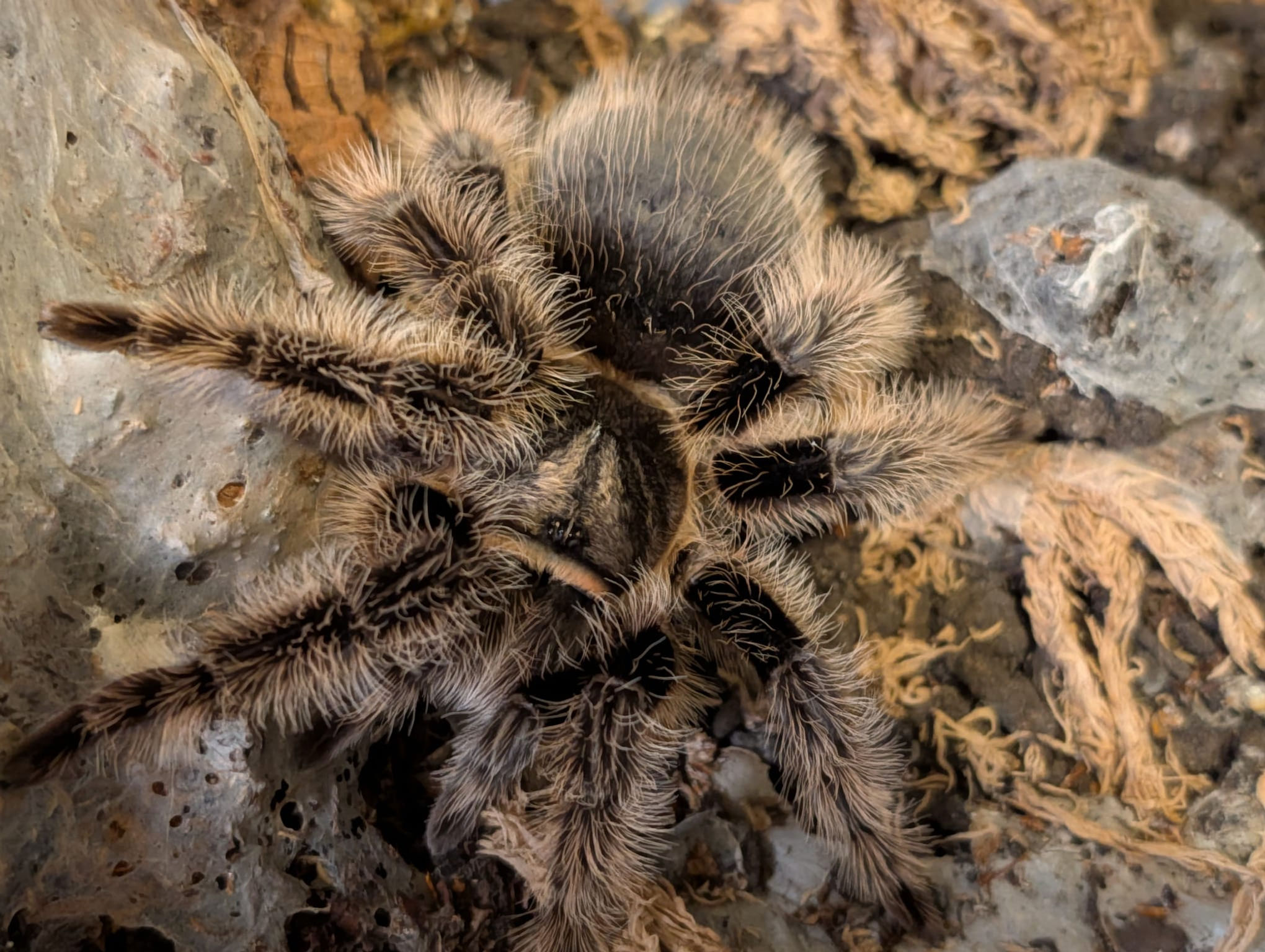

Tliltocatl albopilosus, commonly known as the Curly Hair Tarantula, is a popular New World terrestrial species native to Central America. The "Nicaragua" variant is often referred to in the hobby as the "True Form" or "thoroughbred" lineage.
Key Characteristics of the Nicaragua Variant
- Appearance: Distinguished by a more intense golden-bronze sheen and significantly longer, denser curly hairs (setae) compared to the "Honduran" or "hobby" form.
- Purity: Considered by many breeders to be a more genetically "pure" bloodline, whereas the hobby form is sometimes suspected of historical crossbreeding with other Brachypelma species.
- Temperament: Generally docile and calm, though some keepers report that the Nicaraguan variant can be slightly more skittish as a spiderling compared to the Honduran form.
Biological Overview
- Scientific Name: Tliltocatl albopilosus (formerly Brachypelma albopilosum).
- Lifespan: Females can live up to 20–25 years, while males typically live 4–6 years.
- Size: Adult females reach a diagonal leg span of 5–6.5 inches (13–17 cm).
- Growth Rate: Considered slow to moderate.
Husbandry and Care Requirements (2026 Guidelines)
The Nicaraguan variant follows the same general care requirements as other T. albopilosus forms:
- Enclosure: A terrestrial setup with more floor space than height to prevent injury from falls. A 5–10 gallon tank (approx. 30x30x30cm) is suitable for an adult.
- Substrate: Deep substrate (4–6 inches) is essential to support their semi-burrowing (fossorial) nature. Use moisture-retentive mixes like coconut fibre, peat moss, or specialized forest humus.
- Temperature: Maintain ambient temperatures between 24–28°C (75–82°F).
- Humidity: Aim for 65–80% humidity. This is best achieved by keeping the lower layers of substrate damp while letting the top layer remain mostly dry.
- Feeding:
- Spiderlings: Feed every 2–5 days (pinhead crickets, fruit flies).
- Juveniles: Feed every 4–7 days.
- Adults: Feed every 1–2 weeks (dubia roaches, crickets, mealworms).
- Safety: They possess urticating hairs (Types I & III) on their abdomen, which they may flick if threatened. These can cause skin rashes or eye irritation.
*Credit to Jackie Green for the gorgeous images
Curly Hair Tarantula (Tliltocatl albopilosum nicaragua)
£6.00Price
Out of Stock
)